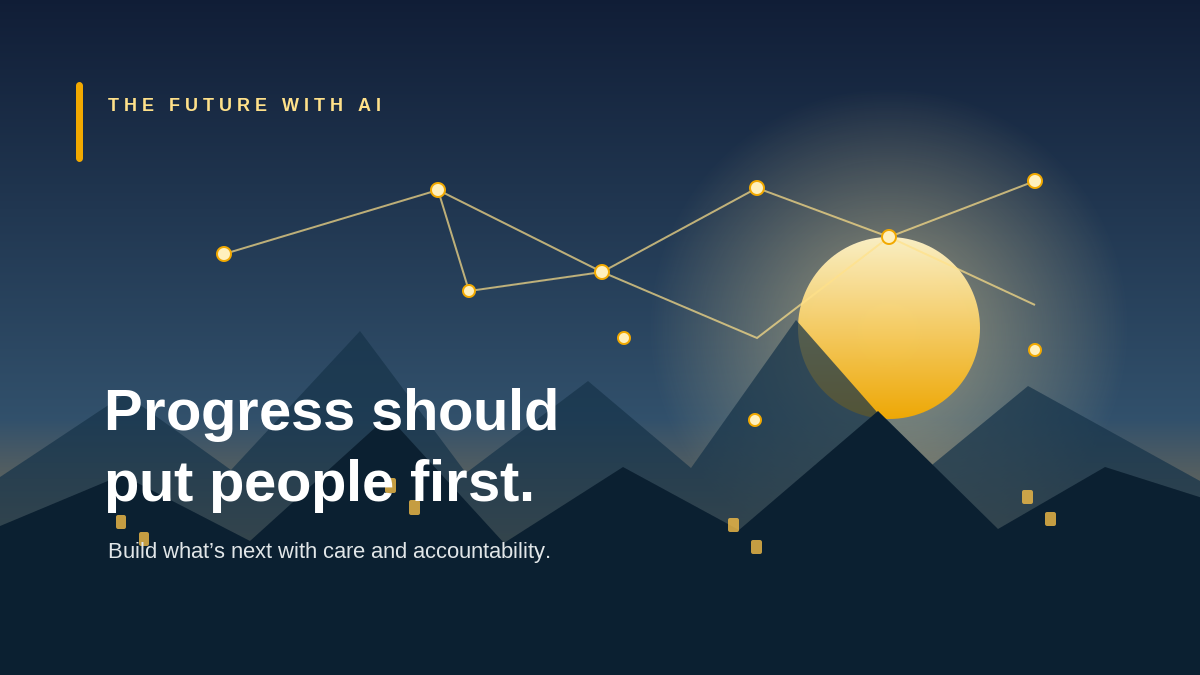
The future with AI will not be shaped by technology alone. It will be shaped by the choices people and organizations make about where these systems belong, what they are allowed to do and who remains accountable for their effects. Capabilities are advancing quickly, but useful progress depends just as much on trust, good information and thoughtful design.
AI is likely to become a more common layer in everyday tools. People may use assistants to find information across approved sources, summarize complex material, translate content and coordinate routine steps across applications. In science, health, education and industry, specialized systems may help professionals notice patterns or explore options more quickly. These systems can support expertise, but they do not remove the need for domain knowledge, careful evaluation or human responsibility.
The most promising direction is often collaboration rather than replacement. When repetitive work is assisted, people can focus more on problem solving, care, creativity and communication. That outcome is not automatic: organizations need to redesign workflows, train teams and consider how benefits and new opportunities are shared. People whose roles change should have a voice in how tools are introduced and support to build relevant skills.
More capable systems also require stronger safeguards. Organizations should know what information a system can access, test outputs for reliability and unfair outcomes, and keep meaningful human review for decisions that affect rights, money, safety or access to services. AI-generated content can be convincing while still being inaccurate. Clear disclosure, traceable sources and a route to challenge consequential decisions help people understand and question how a system is used.
Businesses can prepare without pretending to predict every breakthrough. Build a sound data foundation, strengthen cybersecurity, set clear rules for approved tools and teach staff how to evaluate AI output. Test new capabilities in limited settings, monitor their performance and expand only when evidence supports it. Keep alternatives available when a system fails or is unsuitable.
A better AI future is not simply one with more automation. It is one where technology makes useful services more accessible, helps people do meaningful work and earns trust through responsible practice. The organizations that pair experimentation with accountability will be better prepared to adapt as capabilities evolve.